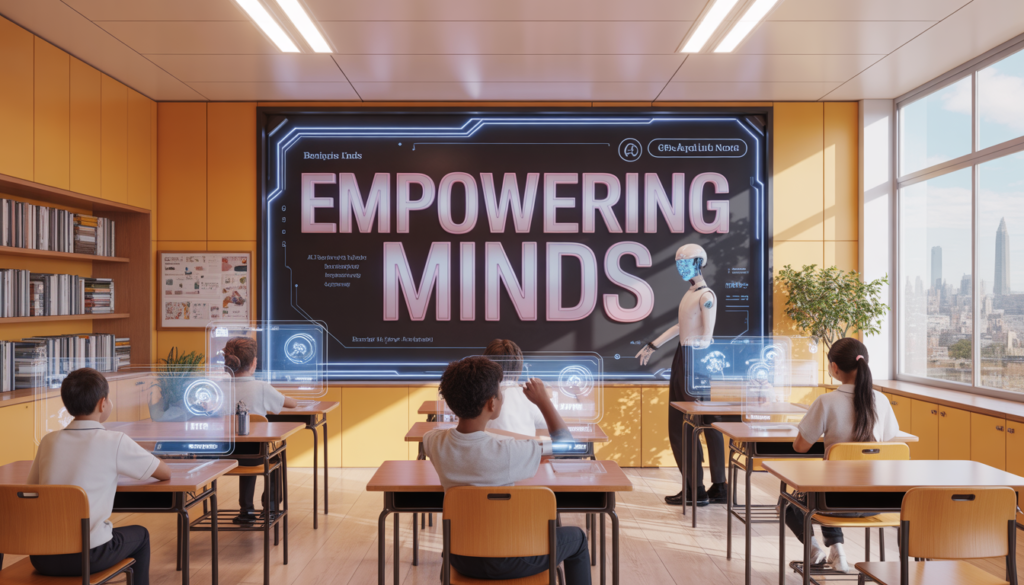

Artificial Intelligence (AI) is no longer something we only see in science-fiction movies where robots teach humans or take over the world (don’t worry, your math teacher is still safe… for now). In 2026, AI has become a real part of classrooms, online courses, and educational platforms around the world.
Schools, colleges, and universities are using AI tools to personalize learning, assist teachers, and analyze student performance. The goal is simple: make education smarter, faster, and more accessible.
However, as with any powerful technology, AI also brings challenges. Concerns about privacy, over-reliance on technology, and fairness are all part of the conversation.
In this detailed guide, we will explore:
-
What AI in education really means
-
The benefits of AI for students and teachers
-
The challenges and risks schools must manage
-
Opportunities that AI creates for the future of learning
And yes, we’ll add a little humor along the way—because education should be interesting, not boring like a 200-slide lecture on ancient calculators.
Understanding AI in Education
Artificial Intelligence in education refers to the use of intelligent computer systems that can analyze data, learn from patterns, and assist with teaching or learning tasks.
These systems can perform many educational tasks, including:
-
Personalized tutoring
-
Automated grading
-
Learning analytics
-
Curriculum recommendations
-
Student performance prediction
AI essentially acts like a digital assistant for teachers and students.
Imagine having a tutor available 24/7 who never gets tired, never complains, and never says, “I already explained this five times!”
That’s basically what AI aims to do.
AI technologies used in education include:
-
Machine learning
-
Natural language processing
-
Intelligent tutoring systems
-
Chatbots
-
Predictive analytics
These tools analyze student behavior and performance to adapt learning experiences in real time.
Why AI Is Becoming Important in Education
Education systems are changing quickly. Traditional classrooms are no longer the only place where learning happens.
Several global trends are pushing the adoption of AI in education:
-
Growth of online learning
-
Large student populations
-
Demand for personalized education
-
Increased use of digital technology
-
Need for better student analytics
AI helps schools manage these challenges by providing efficient and scalable solutions.
For example, AI can analyze large amounts of student data and identify learners who are struggling, allowing teachers to intervene earlier.
In short, AI helps education become more responsive and adaptable.
How AI Is Used in Modern Classrooms
AI is already working behind the scenes in many classrooms and online platforms.
Let’s explore some common applications.
1. Intelligent Tutoring Systems
AI-powered tutors can guide students step-by-step through complex subjects like mathematics or science.
These systems:
-
Provide hints
-
Analyze mistakes
-
Offer personalized explanations
-
Adjust difficulty levels
The best part? They are available anytime.
Yes—even at 2 AM when you suddenly remember you have a test tomorrow.
2. Automated Grading
Teachers often spend hours grading assignments.
AI can automatically grade:
-
Multiple-choice exams
-
Quizzes
-
Programming assignments
-
Some essays
This allows teachers to focus more on teaching instead of drowning in paperwork.
3. Personalized Learning Platforms
AI can analyze each student’s learning style and performance.
It can then customize:
-
Lessons
-
Exercises
-
Difficulty levels
-
Learning speed
This approach moves education away from the traditional “one-size-fits-all” model.
4. AI Chatbots for Student Support
Many universities now use AI chatbots to answer common student questions.
For example:
-
“When is my exam?”
-
“Where can I download lecture notes?”
-
“How do I submit my assignment?”
The chatbot responds instantly, which saves time for both students and administrators.
5. Learning Analytics
AI can analyze patterns in student data such as:
-
Attendance
-
Grades
-
Participation
-
Assignment completion
This allows schools to predict which students might struggle and provide early support.
Think of it as a “learning health check.”
Benefits of AI in Education
AI offers many advantages that can transform how education works.
Let’s explore the biggest benefits.
1. Personalized Learning for Every Student
Traditional education often teaches everyone at the same pace.
But students learn differently.
Some students need more time, while others move faster.
AI solves this problem by creating personalized learning paths.
For example:
| Learning Feature | Traditional Education | AI-Powered Education |
|---|---|---|
| Learning speed | Same for everyone | Adjusts for each student |
| Content difficulty | Fixed | Adaptive |
| Feedback | Delayed | Instant |
| Learning style | Limited | Personalized |
AI systems analyze performance and adjust lessons to match individual needs.
Result: students learn more effectively.
2. Improved Accessibility and Inclusion
AI helps students who face learning barriers.
Examples include:
-
Speech-to-text tools for hearing-impaired students
-
Text-to-speech for visually impaired learners
-
Real-time translation for multilingual classrooms
-
Simplified content for dyslexic learners
These technologies make education more inclusive.
Some experts even say AI could help students with learning difficulties receive better personalized support.
3. Reduced Workload for Teachers
Teachers often handle many responsibilities:
-
Lesson planning
-
Grading assignments
-
Administrative tasks
-
Student communication
AI can automate many of these repetitive tasks.
Benefits for teachers include:
-
More time for teaching
-
Better focus on student interaction
-
Less administrative stress
In other words, AI becomes the assistant teacher who never asks for coffee breaks.
4. Data-Driven Decision Making
AI provides valuable insights for schools and administrators.
Examples include:
-
Identifying struggling students early
-
Measuring learning outcomes
-
Improving teaching strategies
-
Optimizing course design
This helps institutions make better decisions based on real data rather than guesswork.
5. 24/7 Learning Opportunities
AI-powered platforms allow students to learn anytime and anywhere.
Students can:
-
Review lessons
-
Practice exercises
-
Ask AI tutors questions
Learning no longer depends on classroom schedules.
Education becomes flexible and continuous.
6. Faster Feedback for Students
One major challenge in education is delayed feedback.
Students might wait days or weeks to receive graded assignments.
AI provides instant feedback, which helps students improve faster.
Immediate feedback also keeps learners motivated.
Because let’s be honest—waiting two weeks to find out you got a “C” is not very fun.
Challenges of AI in Education
Despite its advantages, AI also raises several concerns.
Technology alone cannot solve every educational problem.
1. Data Privacy and Security
AI systems rely on large amounts of student data.
This may include:
-
Academic records
-
Learning behavior
-
Personal information
If this data is not properly protected, it could lead to privacy risks and security breaches.
Schools must ensure:
-
Secure data storage
-
Transparent data usage policies
-
Compliance with privacy laws
2. The Digital Divide
Not every student has equal access to technology.
Some students lack:
-
Reliable internet
-
Computers or tablets
-
Digital literacy skills
This creates a digital divide where some learners benefit from AI while others are left behind.
Bridging this gap is one of the biggest challenges for education systems.
3. Bias in AI Algorithms
AI systems learn from existing data.
If the training data contains bias, the AI may produce biased outcomes.
Examples include:
-
Unfair grading
-
Unequal recommendations
-
Discrimination against certain groups
Researchers warn that biased algorithms can reinforce existing inequalities if not carefully monitored.
4. Over-Reliance on AI
One major concern is that students may rely too much on AI tools.
Some experts warn that AI chatbots can create a false sense of understanding, where students believe they have mastered a topic without fully learning it.
This can weaken:
-
Critical thinking
-
Problem-solving skills
-
Creativity
In simple terms:
AI should help students think — not think for them.
5. Impact on Teachers’ Roles
Some educators worry that AI might replace teachers.
However, most experts believe AI will support teachers rather than replace them.
Human educators provide things AI cannot:
-
Emotional support
-
Inspiration
-
Creativity
-
Mentorship
Education is not only about information—it is about human connection.
6. Academic Integrity and Cheating
AI tools can generate essays, homework answers, and even code.
This raises concerns about:
-
Plagiarism
-
Academic dishonesty
-
Authentic student assessment
Schools must develop new evaluation methods to ensure students are truly learning.
Opportunities for the Future of AI in Education
While challenges exist, the opportunities are enormous.
AI has the potential to transform education in ways we are only beginning to understand.
1. Global Access to Quality Education
AI-powered platforms can reach students worldwide.
Students in remote areas can access:
-
Virtual tutors
-
Online courses
-
Interactive lessons
This could help reduce global education inequality.
2. Lifelong Learning
The job market is constantly changing.
Workers must continuously update their skills.
AI makes lifelong learning easier through:
-
personalized training
-
skill recommendations
-
adaptive learning platforms
Learning will no longer stop after graduation.
3. Smarter Classrooms
Future classrooms may include:
-
AI teaching assistants
-
virtual reality learning environments
-
real-time learning analytics
Imagine a classroom where the system automatically detects when students are confused and adjusts the lesson instantly.
That would save many teachers from the classic question:
“Does everyone understand?”
…and hearing complete silence.
4. AI Literacy Education
Another opportunity is teaching students about AI itself.
Future curricula may include:
-
AI fundamentals
-
machine learning basics
-
ethical AI use
-
digital literacy
Understanding AI will become a crucial skill for future careers.
5. Human-AI Collaboration in Learning
The future of education will likely involve collaboration between humans and AI.
Think of AI as:
-
the assistant
-
the data analyst
-
the tutor
And teachers as:
-
the mentor
-
the guide
-
the inspiration
Together, they can create a more powerful learning experience.
A Quick Summary Table
| Aspect | Positive Impact | Potential Risk |
|---|---|---|
| Personalized learning | Better student outcomes | Data privacy concerns |
| Teacher productivity | Less administrative work | Overdependence on technology |
| Accessibility | Inclusive education tools | Digital divide |
| Learning analytics | Early intervention | Algorithm bias |
| AI tutors | 24/7 support | Reduced human interaction |
Conclusion
Artificial Intelligence is transforming education in 2026.
From personalized learning platforms to intelligent tutoring systems, AI is helping schools deliver more efficient and accessible learning experiences.
The benefits are clear:
-
customized education
-
improved accessibility
-
faster feedback
-
better data insights