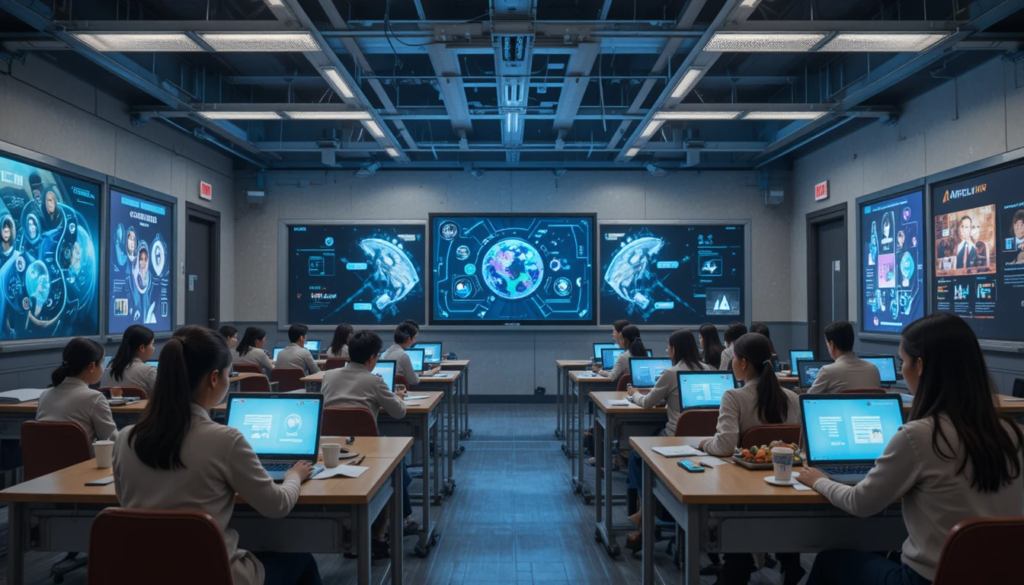

Education in 2026 is nothing like your typical classroom from the early 2000s. Gone are the days when a teacher struggled to get a VHS player working or when students doodled in notebooks because the projector refused to cooperate. Welcome to the era of smart classrooms, where technology and creativity meet, and learning is almost as fun as scrolling social media—almost.
In this article, we’ll explore what smart classrooms are, how technology is transforming education, and what students and teachers can expect in the near future. And yes, we’ll sprinkle some humor along the way, because let’s face it—school without laughter is just homework with chairs.
What Is a Smart Classroom?
A smart classroom is a traditional classroom upgraded with modern technology to improve teaching, learning, and collaboration. Think of it as your old classroom hitting the gym, getting a makeover, and suddenly being able to run a marathon without breaking a sweat.
Key Features of Smart Classrooms
-
Interactive Whiteboards – Goodbye chalk dust! Teachers now use touch-sensitive boards where students can interact directly with lessons.
-
High-Speed Internet & Cloud Integration – Students can access assignments, resources, and research in real time, anywhere.
-
AI-Powered Learning Tools – Personalized lessons based on student performance. It’s like having a teacher who knows exactly when you’re pretending to understand calculus.
-
Virtual and Augmented Reality – History class? Walk through ancient Rome. Biology? Dive inside a cell. Warning: may cause awe and occasional dizziness.
-
Smart Desks & Ergonomics – Desks that adjust to your height, track posture, and sometimes even remind you to stop slouching. Your back will thank you.
| Feature | Function | Benefit |
|---|---|---|
| Interactive Whiteboards | Touch-enabled screens | Engages students visually and physically |
| Cloud Integration | Online access to resources | Flexible learning, anywhere |
| AI Learning Tools | Adaptive lessons | Personalized learning experience |
| VR/AR | Immersive simulations | Makes learning memorable |
| Smart Desks | Posture tracking | Better health and focus |
How Technology Is Changing Teaching Methods
Technology isn’t just giving classrooms gadgets—it’s transforming the way teachers teach.
1. Personalized Learning
No more one-size-fits-all lessons. AI tools now track student progress and suggest tailored exercises. For example:
-
Math whiz Tim gets more challenging problems.
-
Sarah, who struggles with fractions, gets extra practice with step-by-step guidance.
It’s like having a tutor who never gets tired or grumpy—though they still won’t laugh at your bad jokes.
2. Interactive Lessons
Teachers can now use multimedia content like videos, 3D models, and interactive quizzes during class. Students are no longer just passive listeners—they participate, engage, and occasionally argue with AI about why Pluto shouldn’t be a planet.
3. Gamification
Learning is turning into a game. Points, badges, and leaderboards motivate students. “Congratulations, you unlocked the secret of photosynthesis!” suddenly sounds cooler than it used to.
Benefits of Smart Classrooms for Students
Smart classrooms are not just a tech fad—they bring tangible benefits for students.
Enhanced Engagement
With interactive lessons and immersive content, students are more focused. The chances of daydreaming about lunch are reduced… slightly.
Flexibility
Students can access lessons from home or anywhere with internet. Sick day? No problem. Missed class? Watch the recorded session like your favorite Netflix show.
Skill Development
Smart classrooms help develop:
-
Critical thinking
-
Digital literacy
-
Collaboration skills
These skills aren’t just useful in school—they’re essential for future careers where typing emails and using Zoom isn’t optional.
Instant Feedback
AI tools can instantly grade assignments and give feedback, saving teachers hours of grading and students from waiting until next week to know they misunderstood the Pythagorean theorem.
Benefits for Teachers
Teachers also love smart classrooms—mostly because they finally get a break from the paperwork avalanche.
-
Efficient Lesson Planning – AI suggests resources and lesson plans.
-
Better Student Tracking – Track progress and identify students who need extra help.
-
More Creativity – Teachers can design interactive projects instead of relying solely on lectures.
Challenges of Smart Classrooms
Of course, no innovation comes without challenges.
-
High Cost – Setting up smart classrooms is expensive. Not every school can afford VR goggles for 30 students (unless a school fund-raiser turns into a bake sale empire).
-
Training Required – Teachers need training to use new technology effectively. No one wants a teacher trying to explain AI while accidentally opening TikTok.
-
Screen Time Concerns – Too much tech can affect eye health and concentration. Balance is key.
-
Internet Dependence – A bad Wi-Fi day can turn a smart classroom into just… a classroom with expensive toys.
The Role of AI in Smart Classrooms
Artificial intelligence is at the heart of smart classrooms. AI can:
-
Analyze student performance and suggest personalized learning paths.
-
Automate grading and administrative tasks.
-
Predict which students may need additional support.
Think of AI as your school assistant who never complains, doesn’t drink your coffee, and can grade essays faster than a cheetah on roller skates.
Virtual and Augmented Reality: Learning Beyond Textbooks
VR and AR are game-changers in 2026. Instead of reading about the Amazon Rainforest, students can explore it virtually. History lessons? Walk through ancient civilizations. Anatomy class? Examine organs from every angle.
Top VR/AR Tools in Education
| Tool | Function | Example Use |
|---|---|---|
| Google Expeditions | VR field trips | Tour the Great Wall of China |
| zSpace | Interactive AR simulations | Study physics experiments safely |
| Labster | Virtual science labs | Conduct chemistry experiments without spills |
The Future: Smart Classrooms 2030 and Beyond
The classroom of 2030 might sound like sci-fi today, but the seeds are being planted in 2026:
-
AI Tutors – Fully interactive AI tutors that understand each student’s learning style.
-
Holographic Lessons – Teachers could appear as holograms in multiple classrooms simultaneously.
-
Emotion-Sensing Tech – Classrooms that detect when students are confused or stressed, and adjust the lesson in real-time.
Imagine a classroom where your AI tutor says, “Hmm, I see you’re frustrated with algebra… let’s try it another way” before you even sigh audibly.
Funny Realities of Smart Classrooms
While technology is amazing, some things never change:
-
Students will still forget their chargers.
-
Someone will always try to prank the AI assistant.
-
And yes, a kid somewhere will ask if the robot teacher eats homework.
Humor aside, these small moments make learning human, even in a tech-heavy environment.
Tips for Students and Teachers to Thrive in Smart Classrooms
For Students
-
Stay organized digitally – folders are your new best friends.
-
Take regular breaks from screens – eyes need rest too.
-
Don’t rely entirely on AI – critical thinking is still yours to flex.
For Teachers
-
Learn the tech but keep your human touch.
-
Use gamification wisely – fun is good, but learning is the goal.
-
Stay flexible – tech glitches will happen, and your patience will be tested.
Conclusion
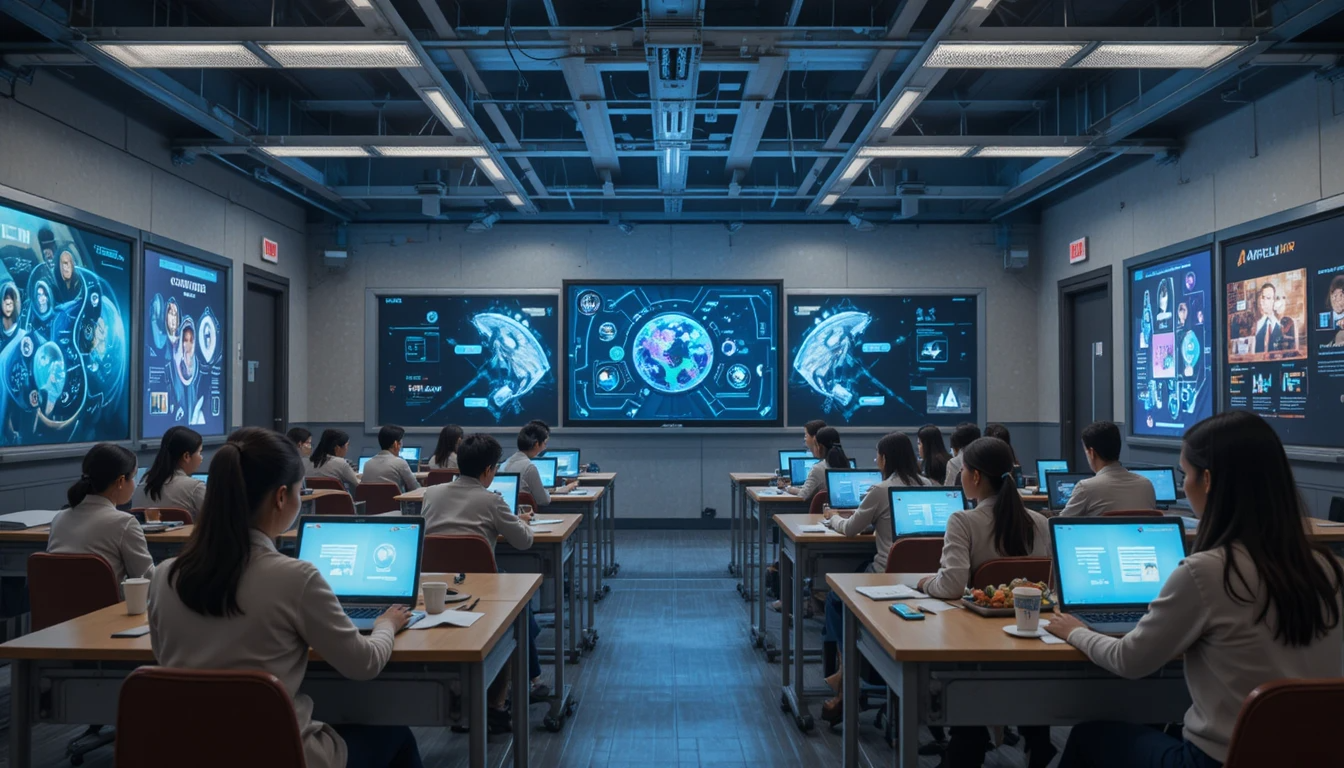
Smart classrooms in 2026 are transforming education in ways that are exciting, innovative, and occasionally hilarious. From AI tutors to VR field trips, students and teachers alike are seeing a new world of possibilities. While challenges exist—costs, training, screen time—the benefits of engagement, flexibility, and personalized learning are undeniable.