
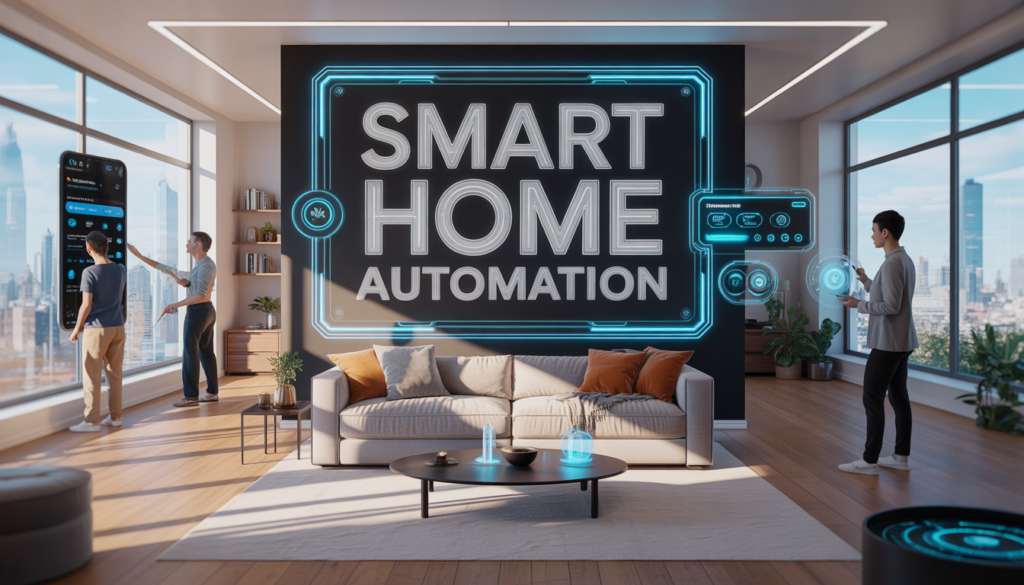

Imagine walking into your house after a long day. The lights turn on automatically, your favorite music starts playing softly, the air conditioner adjusts to your preferred temperature, and your fridge reminds you that you’re out of milk.
No, this isn’t a scene from a futuristic movie. This is what smart living in 2026 looks like.
Technology has slowly moved from our pockets to our homes, and now our homes are becoming intelligent spaces that can learn, adapt, and even predict our needs. From smart lights to AI-powered security systems, homes today are more connected than ever before.
In this article, we will explore how technology is transforming homes in 2026. We’ll look at the tools, trends, and benefits that make smart living not only convenient but also energy-efficient and secure. And yes, we’ll add a few jokes along the way—because technology is cool, but laughing while learning is even cooler.
What Is Smart Living?
Smart living refers to using connected technology and automation inside a home to improve comfort, security, energy efficiency, and daily convenience.
A smart home typically uses devices connected through the Internet of Things (IoT). These devices communicate with each other and can be controlled through apps, voice commands, or automated routines.
In simple terms, smart living means your home can:
-
Understand your habits
-
Automate everyday tasks
-
Save energy
-
Keep you safe
Think of it as your home becoming your personal assistant—except it doesn’t complain about working overtime.
Why Smart Homes Are Growing Fast
Smart homes are becoming popular because they make life easier and more efficient. Several technological trends are pushing this transformation forward.
1. Artificial Intelligence in Everyday Life
Artificial intelligence (AI) is now powering many home devices. These systems can learn routines and adjust settings automatically, making the home more personalized.
For example:
-
Your thermostat learns when you wake up.
-
Lights adjust depending on the time of day.
-
Your security system recognizes family members.
Basically, your house slowly starts to know you better than your neighbor does.
2. The Rise of the Internet of Things (IoT)
The Internet of Things connects devices like lights, appliances, cameras, and thermostats into one ecosystem.
Examples include:
-
Smart refrigerators
-
Smart ovens
-
Smart lighting systems
-
Smart door locks
These devices can communicate with each other to create fully automated environments.
3. Better Device Compatibility
One major challenge in the past was compatibility. Devices from different companies often didn’t work together.
Now, standards like Matter allow devices from different brands to communicate easily, creating seamless smart home ecosystems.
This means:
-
Fewer apps
-
Easier setup
-
Less frustration
Finally, your smart bulb and smart speaker can actually be friends.
The Core Technologies Behind Smart Homes
Before diving deeper into the features, let’s look at the technologies that power smart living.
| Technology | What It Does | Example |
|---|---|---|
| Artificial Intelligence | Learns behavior patterns | Smart thermostats |
| Internet of Things (IoT) | Connects devices | Smart lighting |
| Voice Assistants | Hands-free control | Smart speakers |
| Automation | Runs scheduled tasks | Automatic blinds |
| Sensors | Detect movement, light, temperature | Security systems |
These technologies combine to create homes that respond intelligently to human behavior.
Smart Home Devices Transforming Everyday Living
Let’s explore some of the devices making homes smarter in 2026.
1. Smart Lighting Systems
Smart lighting is often the first step into home automation.
These lights can:
-
Change brightness automatically
-
Adjust color temperature
-
Turn on when someone enters the room
They can also be scheduled to turn off when nobody is around.
For example:
-
Lights dim automatically during movie night.
-
Outdoor lights turn on at sunset.
Your house basically becomes a lighting director for your life.
2. Smart Thermostats
Smart thermostats control heating and cooling more efficiently.
These devices:
-
Learn your schedule
-
Adjust temperatures automatically
-
Save energy when you’re away
Some models can reduce energy bills by 10–25% through intelligent temperature control.
Imagine a thermostat that says:
“Hey, I noticed you always complain about being cold at 9 PM. I fixed that.”
Now that’s friendship.
3. Smart Security Systems
Security is one of the biggest reasons people adopt smart home technology.
Modern smart security systems include:
-
Smart doorbells
-
AI cameras
-
Motion sensors
-
Smart locks
Some new systems even use facial recognition to identify family members and visitors.
For example:
-
The door unlocks automatically when you arrive.
-
You receive alerts when someone approaches the door.
-
Cameras distinguish between a delivery person and a random cat.
Though the cat might still look suspicious.
4. Smart Speakers and Voice Assistants
Smart speakers act as the central hub for many smart homes.
They allow voice commands like:
-
“Turn off the lights.”
-
“Play music.”
-
“Set the temperature to 22 degrees.”
Popular devices also act as smart home controllers, connecting other devices in the home.
Voice control is becoming more advanced, and some systems now support offline voice recognition, allowing commands without internet connectivity.
So even if your Wi-Fi disappears, your home will still listen to you.
5. Smart Kitchens
The kitchen is also becoming smarter.
Smart kitchen appliances include:
-
Connected refrigerators
-
Smart ovens
-
Automated coffee machines
Some refrigerators can:
-
Track food expiration dates
-
Suggest recipes
-
Create grocery lists
Your fridge may soon know your diet better than your doctor.
How Automation Makes Homes Smarter
Automation is where the real magic happens.
Instead of manually controlling devices, automation allows your home to react automatically.
For example:
Morning Routine
-
Alarm rings
-
Curtains open automatically
-
Coffee machine starts
-
Lights slowly brighten
Night Routine
-
Lights dim
-
Doors lock
-
Security cameras activate
-
Thermostat lowers temperature
Automation allows devices to coordinate and create smooth daily experiences.
Energy Efficiency and Sustainability
Smart homes are not just convenient—they’re also environmentally friendly.
AI-powered energy systems monitor electricity usage and optimize power consumption.
Some smart homes can reduce energy consumption by up to 30% using intelligent monitoring and automation.
Energy-saving smart features
-
Smart thermostats
-
Automated lighting
-
Smart energy meters
-
Solar energy monitoring
This helps homeowners save money while reducing environmental impact.
Your electric bill might finally stop giving you heart attacks.
Health and Wellness in Smart Homes
Technology is also improving health and wellness at home.
Modern smart homes can monitor:
-
Air quality
-
Sleep patterns
-
Temperature comfort
-
Indoor humidity
Some smart homes even connect with health monitoring systems, creating environments that support healthier lifestyles.
For example:
-
Air purifiers activate automatically when pollution increases.
-
Bedroom lighting adjusts to improve sleep cycles.
Your house basically becomes your personal wellness coach.
The Role of Local AI Hubs
One exciting development in 2026 is the rise of local AI hubs.
Instead of sending data to the cloud, many smart homes now process data locally inside the home.
Benefits include:
-
Faster response times
-
Better privacy
-
Less reliance on internet connectivity
For example:
Your house can recognize your movement and adjust lighting instantly without contacting external servers.
That means your smart home reacts faster than you can say “Where is the light switch?”
Advantages of Smart Living
Let’s summarize the key benefits of smart homes.
| Benefit | Description |
|---|---|
| Convenience | Automates daily tasks |
| Energy Savings | Reduces electricity consumption |
| Security | Smart cameras and locks |
| Comfort | Personalized temperature and lighting |
| Remote Control | Manage your home from anywhere |
These advantages make smart homes attractive for homeowners worldwide.
Challenges of Smart Homes
While smart homes offer many benefits, they also come with some challenges.
1. Privacy Concerns
Connected devices collect data, which raises privacy concerns.
Users must ensure:
-
Strong passwords
-
Secure networks
-
Regular software updates
2. Initial Cost
Setting up a smart home can require an initial investment.
However, the long-term benefits often outweigh the costs through:
-
Energy savings
-
Improved security
-
Increased property value
3. Technical Complexity
Some people find smart technology confusing.
But fortunately, newer systems are becoming simpler to install and use.
In many cases, setup now takes less time than assembling furniture from IKEA.
How Smart Homes Affect Real Estate
Smart technology is also transforming the housing market.
Homebuyers increasingly look for features like:
-
Smart security systems
-
Energy-efficient automation
-
Connected appliances
Smart homes often have higher property value and stronger buyer demand.
In the future, smart technology may become as standard as electricity or plumbing.
Imagine a real estate listing that says:
“3 bedrooms, 2 bathrooms, and a house that knows when you want pizza.”
Sold.
What the Future of Smart Living Looks Like
Smart homes will continue evolving over the next decade.
Future developments may include:
-
AI-powered personal home assistants
-
Gesture-based home control
-
Smart walls and displays
-
Fully automated kitchens
-
Self-maintaining appliances
Homes will increasingly become interactive environments that support productivity, health, and comfort.
Instead of simply living in houses, people will live in responsive digital ecosystems.
Tips for Starting Your Smart Home Journey
If you’re interested in smart living, start small.
Here are some easy steps:
Step 1: Start with lighting
Smart bulbs are affordable and easy to install.
Step 2: Add a smart speaker
This becomes your control hub.
Step 3: Install a smart thermostat
Save energy and improve comfort.
Step 4: Upgrade security
Add cameras or smart locks.
Step 5: Expand gradually
Connect more devices over time.
Remember, you don’t need to automate everything at once.
Your home can become smarter one device at a time.
Final Thoughts
Smart living in 2026 is transforming the way we interact with our homes. With artificial intelligence, IoT devices, automation, and advanced sensors, houses are becoming more intelligent, efficient, and secure.
What once seemed futuristic is now becoming normal.
Homes can now:
-
Learn our habits
-
Save energy
-
Improve security
-
Simplify daily life
And the best part?